

There's a mathematical truth hiding inside James Clear's Atomic Habits that most conference planners and CEOs have never applied to their events budget.
If you improve by just 1% every day, you are twice as good in 72 days.
Not incrementally better. Not marginally improved. Twice as good.
Now apply that to your organisation — in 2026, a year when artificial intelligence is no longer a future threat or a distant opportunity. It is the present operating reality. Agentic AI systems are making autonomous decisions. Boards are grappling with AI governance. Employees are asking whether their roles will exist in five years. And leaders are discovering that the hardest part of the AI transition isn't the technology. It's the humans.
This is precisely why the most forward-thinking organisations in the world are investing more than ever in futurist keynote speakers — not for inspiration, but for strategic cognitive alignment at scale.
WHAT DOES A FUTURIST KEYNOTE SPEAKER ACTUALLY DO IN 2026?
The role of a futurist keynote speaker has evolved. Where it once meant painting vivid pictures of a distant tomorrow, in 2026 the job is far more urgent: helping organisations navigate the gap between where exponential technology has arrived and where human culture, governance, and ethics are still catching up.
The best futurist speakers today work at the intersection of several converging forces: agentic AI — autonomous systems that can plan and act without human prompting; explainable AI — the growing demand that AI decisions be transparent and auditable; responsible AI — the ethics, governance, and accountability frameworks organisations must embed now; and sustainable futures — the reality that every technology decision carries an environmental and social cost that regulators, investors, and customers are scrutinising closely.
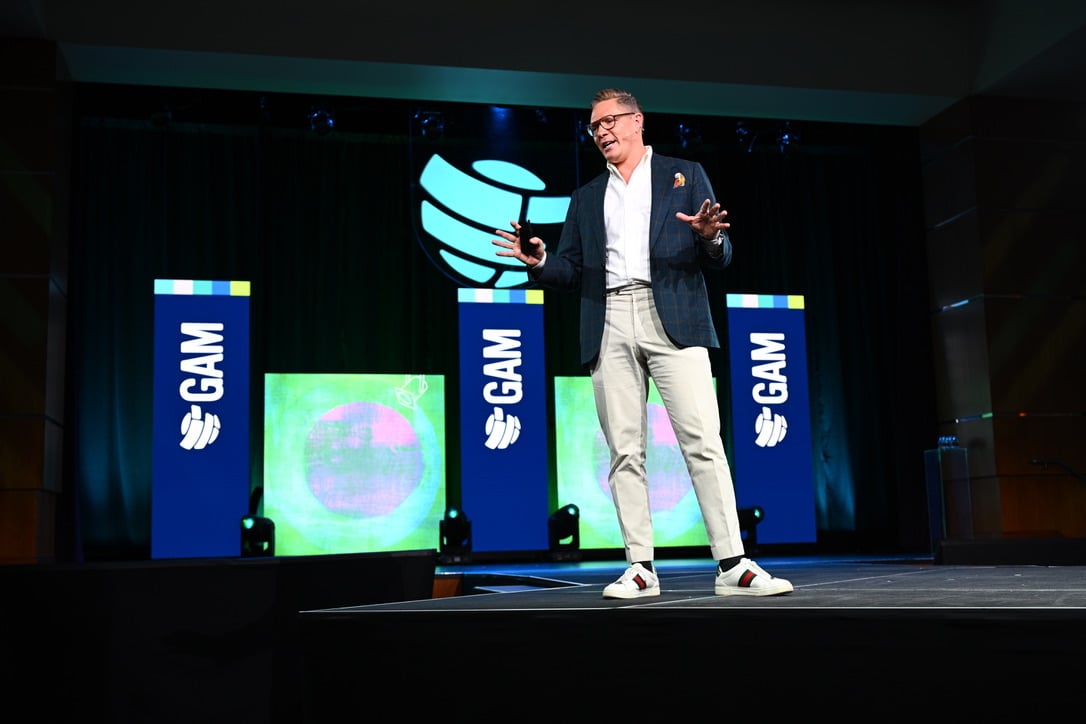
A great futurist keynote speaker translates all of this complexity into one thing: an idea your audience can act on tomorrow. That's the job. Everything else is context.
WHAT IS THE ROI OF HIRING A KEYNOTE SPEAKER IN THE AGE OF AI?
This is the question every CFO asks, and it deserves a rigorous answer.
The ROI of a keynote speaker isn't measured in applause or post-event survey scores. It's measured in behaviour change — and behaviour change, compounded across hundreds or thousands of employees, produces exponential financial returns.
Here's the maths:
- Improve by 1% every day → you are twice as good in 72 days.
- A conference audience of 500 people each adopts one new idea — one new habit, one AI workflow, one governance practice — and deploys it consistently across your organisation.
- Compounded over a quarter, that is not a line item. That is a strategic multiplier
In a year where the gap between AI-ready organisations and AI-reluctant ones is widening by the month, the cost of cognitive stagnation is no longer theoretical. It shows up in talent retention, in competitor advantage, and in the speed at which your teams can responsibly adopt agentic tools without creating ethical or reputational risk.
The question isn't whether you can afford a great keynote speaker. It's whether you can afford the alternative.
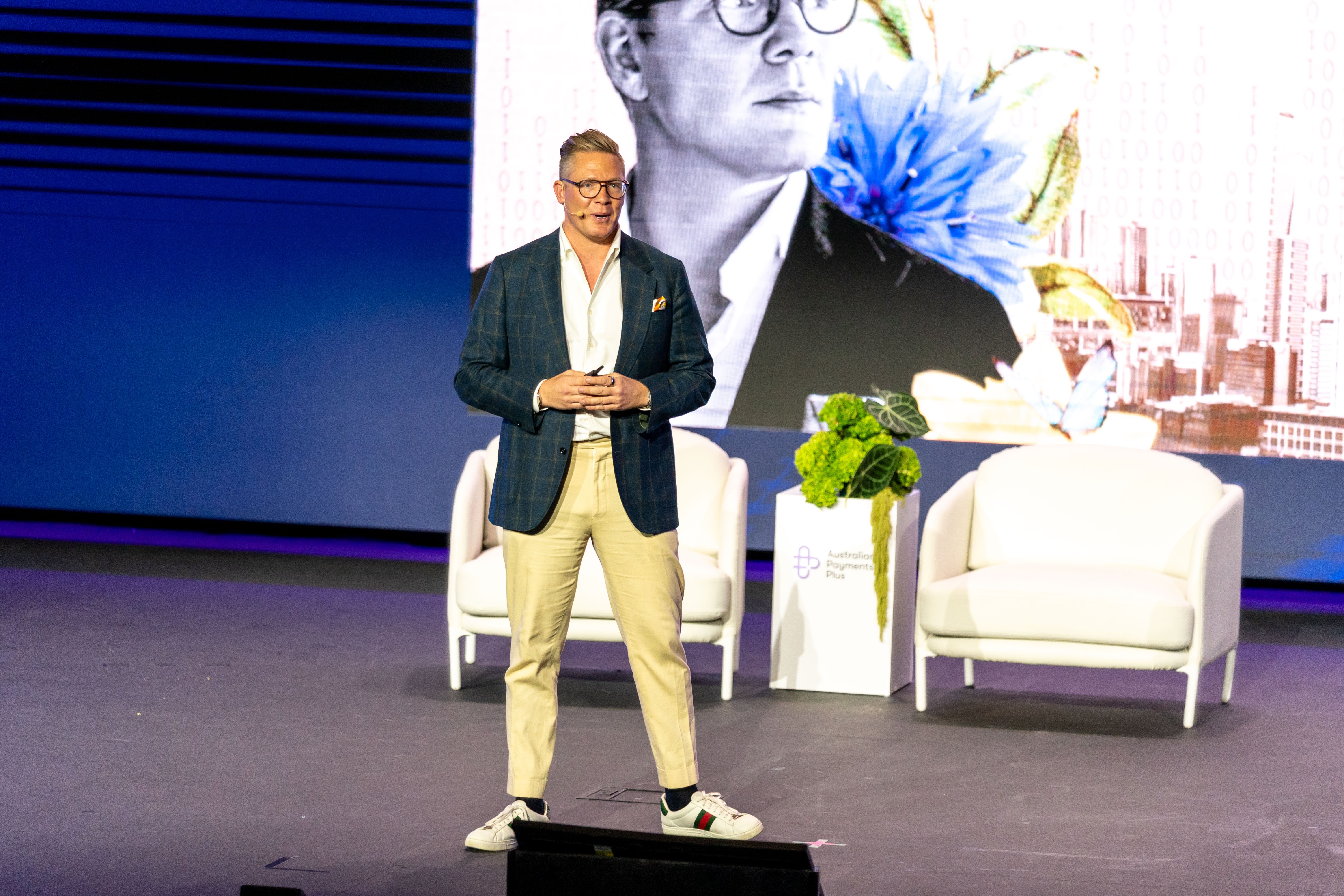
WHAT IS AGENTIC AI AND WHY DOES IT MATTER FOR CONFERENCE KEYNOTES?
Agentic AI refers to AI systems that can autonomously plan, decide, and execute multi-step tasks without continuous human oversight. In 2026, agentic AI is no longer a research concept — it is being deployed in legal teams, financial services, healthcare administration, and customer experience operations globally.
For organisations, this represents a step-change in both opportunity and risk. The opportunity: dramatic productivity gains and the ability to scale human expertise in ways previously impossible. The risk: accountability gaps, explainability challenges, and cultures that haven't been prepared to supervise systems that move faster than any policy manual.
A futurist keynote speaker who understands agentic AI — not just theoretically, but from direct boardroom experience — can help leadership teams ask the right questions before the wrong decisions get made autonomously at scale. That is a tangible, measurable return on the cost of a keynote.
.png?width=1116&height=1116&name=unnamed%20(55).png)
WHY IS RESPONSIBLE AI THE MOST IMPORTANT KEYNOTE TOPIC OF 2026?
Responsible AI has moved from ethics committee agenda item to existential business risk. In 2026, the EU AI Act is reshaping how global organisations deploy and govern AI systems. Investors are applying ESG-adjacent scrutiny to AI governance frameworks. And customers — particularly in B2B markets — are beginning to ask: how do you use AI, and can you prove it's fair, transparent, and safe?
The organisations that will lead the next decade are not the ones that move fastest with AI. They are the ones that move most responsibly — building explainability into their models, embedding human oversight into agentic workflows, and creating cultures where people feel empowered to challenge AI outputs rather than deferring to them.
Boards and leadership teams need someone who can make responsible AI feel strategic rather than bureaucratic — who can reframe compliance as competitive advantage. That is the work of a great futurist keynote speaker.
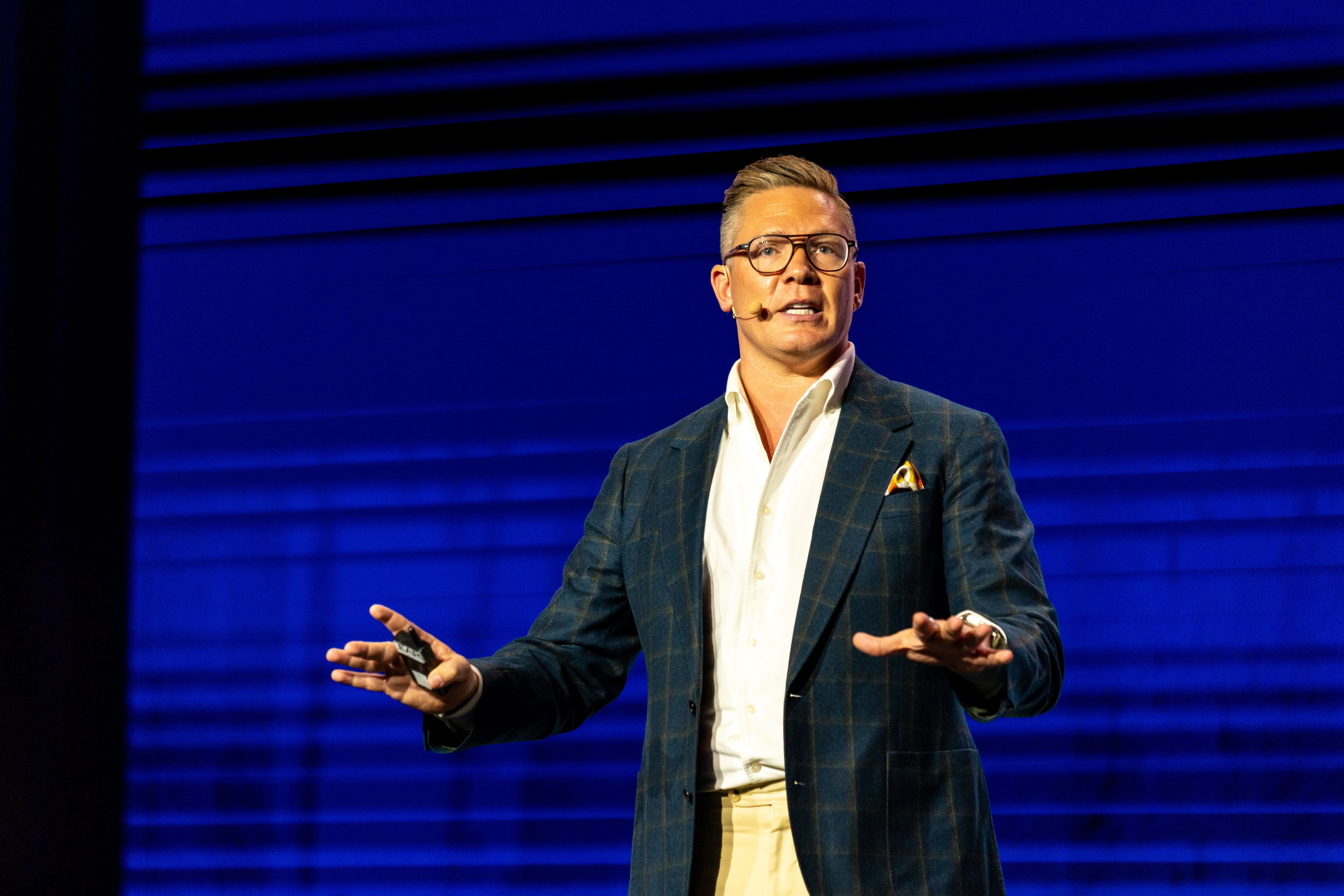
WHY DO WORLD-LEADING ORGANISATIONS INVEST IN FUTURIST KEYNOTE SPEAKERS?
The world's most forward-thinking organisations don't treat conference keynotes as entertainment. They treat them as strategic intelligence delivery — and increasingly, as cultural inoculation against the speed of change.
Organisations including Apple, Google, Meta, McKinsey, Adobe, LEGO, Dyson, and Rugby New Zealand have engaged futurists to challenge their leadership teams, stress-test their innovation assumptions, and build the cultural readiness required to navigate exponential change responsibly.
The common thread is this: the biggest risk in 2026 is not disruption from outside. It is the confidence gap from within — leaders who have access to extraordinary tools but lack the frameworks, the language, and the psychological permission to deploy them wisely.
A futurist keynote speaker closes that gap. They bring the view from the frontier directly to your conference floor — and they make it actionable before the post-event coffee goes cold.
HOW DOES A KEYNOTE SPEAKER DRIVE CULTURAL READINESS FOR AI?
Culture doesn't just eat strategy for breakfast. In 2026, culture is eating AI transformations whole.
The organisations that have struggled most with AI adoption are not those that lacked access to tools or budget. They are those whose cultures were not psychologically prepared to use those tools — where fear, scepticism, or uncritical over-reliance created friction at every implementation stage.
A great futurist keynote speaker addresses both failure modes simultaneously. They make the future feel urgent enough to act on and safe enough to explore. They give people permission to be curious about agentic AI, to ask hard questions about explainability, and to advocate for responsible practices without feeling like they're slowing progress down.
That emotional and intellectual shift — what I call a change of heart at scale — is what separates a culture that is future-fit from one that is future-frightened. And it is something no internal memo, town hall, or e-learning module can replicate at the speed an organisation needs in 2026.
WHAT MAKES ANDERS SÖRMAN-NILSSON DIFFERENT FROM OTHER KEYNOTE SPEAKERS?
Anders Sörman-Nilsson is a Swedish-Australian futurist, the founder of Thinque, and one of the most commercially-grounded innovation speakers working today. His edge isn't in predicting the future. It's in making the future useful — translating the complexity of agentic AI, responsible technology, and exponential change into frameworks that leaders can implement the day after the conference.
He has guided Apple, Google, Meta, McKinsey, Adobe (where he serves as an AI brand ambassador), LEGO, Dyson, and Rugby New Zealand through the intersection of digital transformation and human connection. He serves as futurist-in-residence for the Brisbane Broncos and advises Fortune 500 boardrooms across every major industry.
He is the author of three books — Digilogue, Seamless, and Aftershock — and his insights have been featured in the Wall Street Journal, the New York Times, Monocle, Forbes, and the BBC.
His keynotes are built around one principle: if every person in the room leaves with one new idea and deploys it, the compound effect across the organisation is exponential. The 72-day rule isn't a metaphor. It's the business model.
WHAT ARE THE MOST IN-DEMAND FUTURIST KEYNOTE TOPICS FOR 2026?
Responsible AI and Governance — How to build AI frameworks that are ethical, auditable, and commercially sustainable — and why responsible AI is the new competitive moat.
Agentic AI and the Future of Work — What autonomous AI systems mean for human roles, organisational design, and the skills that will matter most in the next three years.
Explainable AI and Trust — Why the next frontier of AI adoption is not capability but credibility, and how to build cultures that can critically evaluate AI outputs rather than blindly follow them.
Sustainable Futures and Tech Ethics — How the environmental footprint of AI infrastructure, the social implications of automation, and the ethical use of data are reshaping what it means to be a responsible organisation.
Innovation Culture in the Age of Exponential Change — Why most organisations have the tools for transformation but not the mindset, and what it takes to build a culture where change is welcomed rather than resisted.
HOW DO I BOOK A FUTURIST KEYNOTE SPEAKER FOR MY 2026 CONFERENCE OR EVENT?
The best futurist speakers are typically booked three to twelve months in advance for major conferences and leadership summits. For executive offsites and AI strategy workshops, timelines can be shorter — but the earlier you engage, the more the content can be tailored to your specific industry, AI maturity level, and strategic priorities.
When evaluating keynote speakers for 2026, the most important question isn't "are they entertaining?" It's: "Will my people leave with one idea that changes how they think about AI, responsibility, and the future — and will they actually use it?"
If the answer is yes, the investment pays for itself before the quarter is out.
To enquire about Anders Sörman-Nilsson's availability for your next keynote, AI leadership workshop, or executive summit, email us today.
---
THE BOTTOM LINE: ONE IDEA, COMPOUNDED, CHANGES EVERYTHING
The 72-day rule is simple arithmetic. One percent better every day, for 72 days, and you have doubled your performance. Applied to an organisation navigating agentic AI, responsible technology, and exponential change, the maths becomes a mandate.
A futurist keynote speaker who delivers one powerful, actionable idea to your audience isn't a cost. They are a catalyst — for cultural readiness, for responsible innovation, and for the kind of compound growth that shows up on the bottom line long after the conference lanyard has been filed away.
The question isn't whether your organisation can benefit from exponential thinking. The question is how long you can afford to wait before you start.
SOURCES
1. Clear, James. Atomic Habits: An Easy & Proven Way to Build Good Habits & Break Bad Ones. Avery, 2018. jamesclear.com/atomic-habits
2. The 72-day doubling calculation: 1.01^72 ≈ 2.047. Verified via compound interest formula.
3. Brailsford, Dave. Marginal gains and British Cycling. Harvard Business Review, 2015. hbr.org/2015/10/how-1-performance-improvements-led-to-olympic-gold
4. EU Artificial Intelligence Act — Official Journal of the European Union, 2024. Enforcement timeline: 2025–2026. eur-lex.europa.eu/legal-content/EN/TXT/?uri=CELEX:32024R1689
5. World Economic Forum. Future of Jobs Report 2025. weforum.org/publications/the-future-of-jobs-report-2025
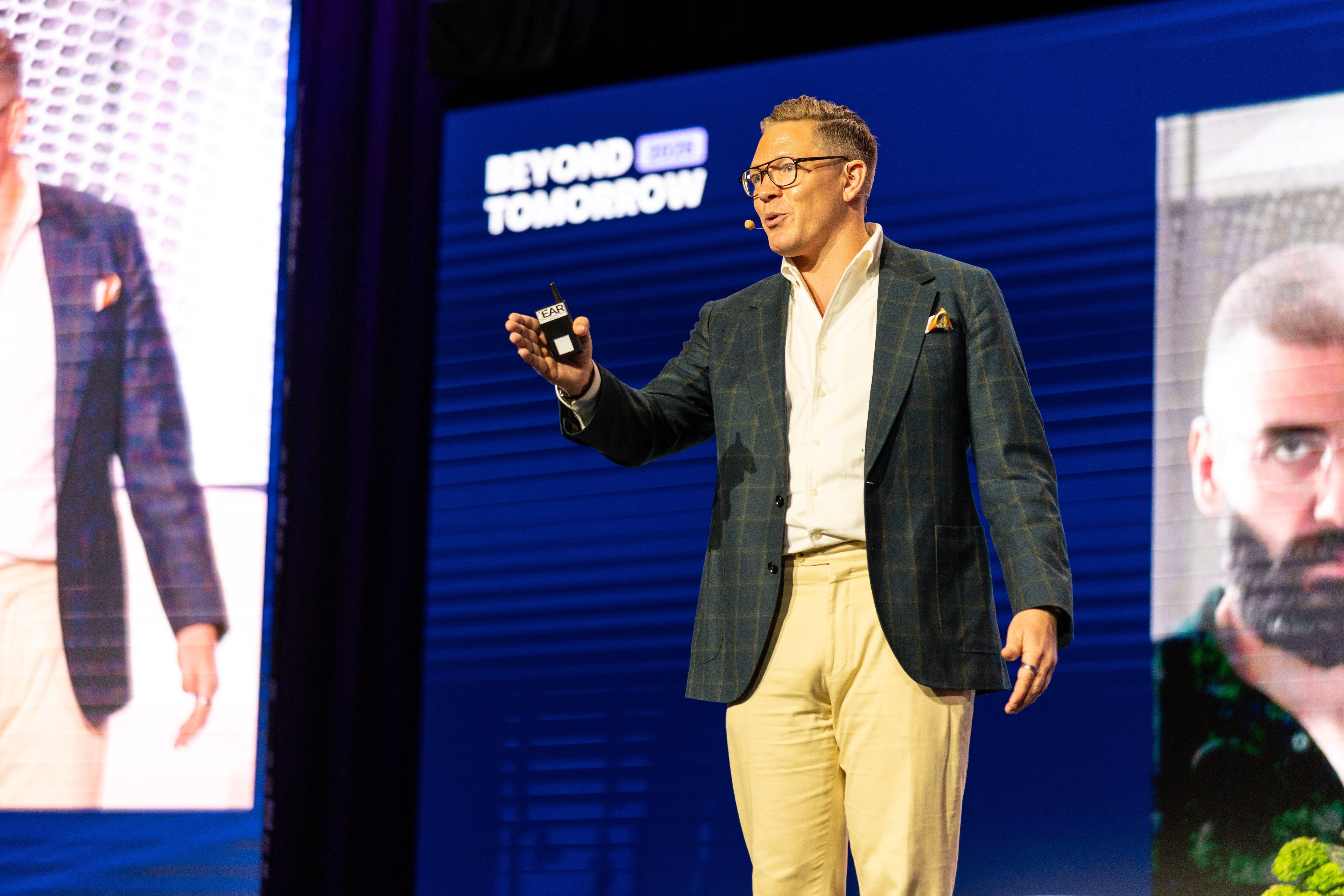
ABOUT ANDERS SÖRMAN-NILSSON: Anders is a Swedish-Australian futurist and the founder of Thinque. He is the author of Digilogue, Seamless, and Aftershock, and his work has been featured in the Wall Street Journal, the New York Times, Forbes, Monocle, and the BBC. He has guided Apple, Google, Meta, McKinsey, Adobe, LEGO, Dyson, and Rugby New Zealand through digital transformation, responsible AI adoption, and innovation culture. To enquire about keynote, workshop, or advisory availability, visit thinque.com