

What happens when a weekly injection reshapes entire industries overnight?
The Short Answer
GLP-1 medications like Ozempic aren't just disrupting healthcare—they're triggering second and third-order effects across food, alcohol, retail, insurance, and even our moral frameworks around weight. By 2030, one in ten Australians will be on these drugs, and the ripple effects are already reshaping business models globally.
"Nobody buys weight loss shakes anymore. Everyone's on Ozempic."
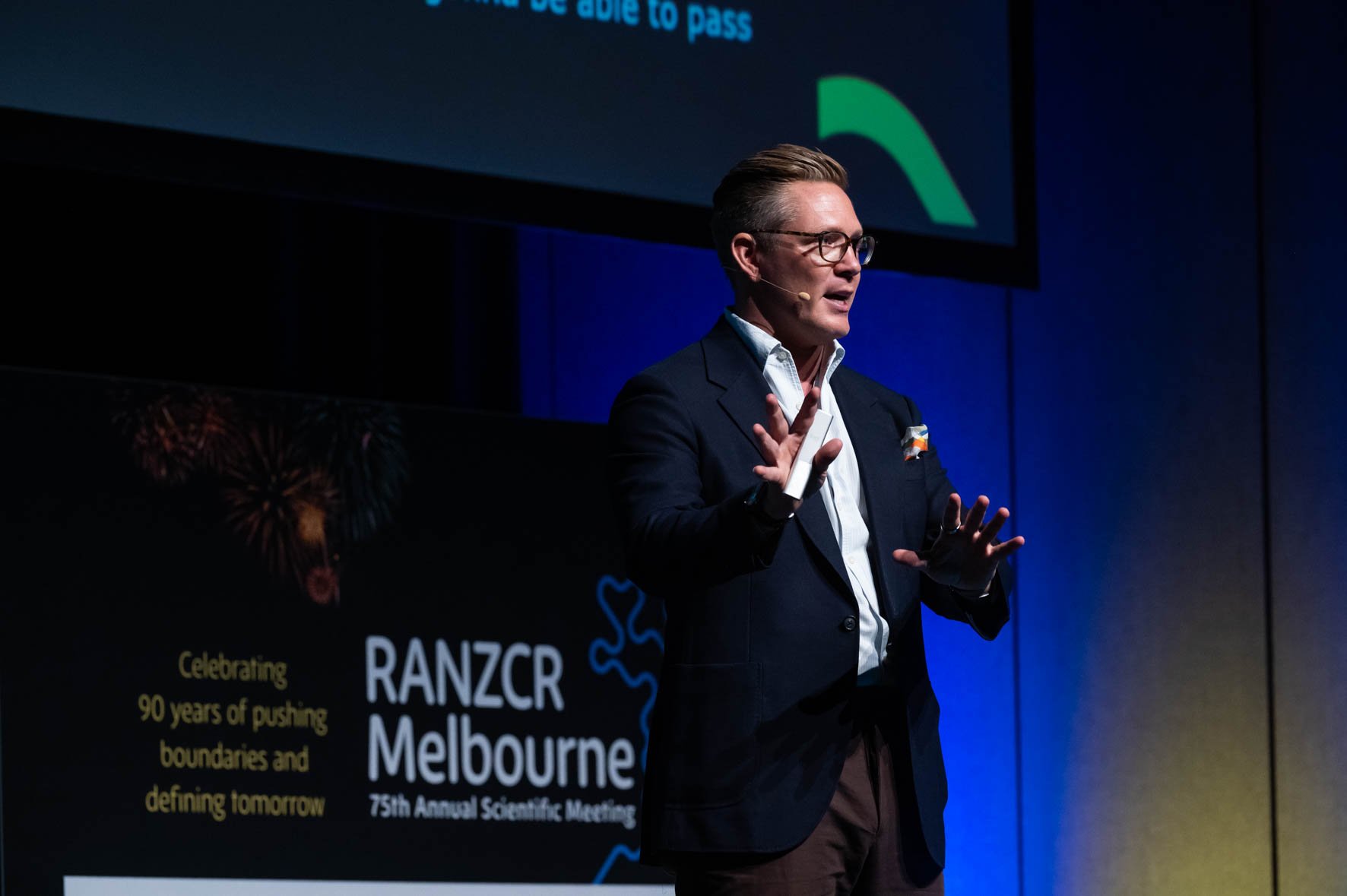
That line stopped me cold at a pharmacy conference I spoke at recently. A pharmacist describing, in one sentence, how a single medication has obliterated an entire product category.
But here's what most business leaders are missing: this isn't a healthcare story. It's a civilisational shift hiding in plain sight.
GLP-1 medications like Ozempic, Wegovy, and Mounjaro have triggered what I call a cultural inflection point—a moment where consumer behaviour changes faster than institutions can adapt. And if you're not paying attention to the second and third-order effects, you're already behind.
What Are GLP-1 Medications and Why Do They Matter for Business?
GLP-1 (glucagon-like peptide-1) receptor agonists were originally developed for Type 2 diabetes. But they've become something far more significant: a consumer-adopted technology that's rewriting the rules of multiple industries simultaneously.
The numbers tell the story:
- By 2030, over 2.4 million Australians—nearly 10% of the population—are projected to be using GLP-1 medications (Morgan Stanley via Medical Republic)
- Half a million Australians already use them monthly (SBS News)
- The Australian market hit $800 million in 2024 and is projected to reach $3 billion by 2034 (Pedestrian TV)
- Globally, the market is exploding toward $105 billion by 2030 (Morgan Stanley)
But the raw numbers don't capture what's really happening. When Novo Nordisk and Eli Lilly brought these drugs to market, they didn't just launch pharmaceuticals—they launched a cultural moment.
Ozempic isn't just a medication. It's a hashtag. A dinner party conversation. A celebrity controversy. A meme. It's been discussed more on TikTok than in doctors' offices.
And that's precisely what makes it so disruptive.
The Second and Third-Order Effects Nobody's Talking About
I've spent two decades helping organisations like Apple, Google, Microsoft, and Aldi navigate structural disruption. And what I'm seeing with GLP-1s follows a pattern I call convergent disruption—where multiple industries get hit simultaneously by the same underlying shift.
1. Sleep Apnea Equipment Is Declining
I've worked with ResMed, and when GLP-1s hit the market, their share price took a hit. Why? When people lose weight, they snore less. Less snoring means less need for CPAP machines (IG Bank).
A diabetes drug is disrupting medical device manufacturing. That's second-order thinking in action.
2. Grocery Procurement Is Being Rewritten
I work with companies like Aldi, and here's what keeps their procurement teams up at night: households on GLP-1s are spending 5-8% less on groceries (Cornell University).
When you multiply that across millions of households, the structural demand shift is staggering. This isn't a diet trend. It's a permanent recalibration of consumer behaviour.
3. The Alcohol Industry Faces an Existential Reckoning
Research shows GLP-1 users are consuming significantly less alcohol, with studies indicating reduced alcohol consumption by 50% fewer drinks per occasion (Beverage Daily). Multiple studies confirm GLP-1s reduce alcohol cravings and drinking intensity (Endocrine Society).
If you're a brewery in Bavaria or a winery anywhere in the world, this isn't a headwind—it's an existential threat to the volume growth model. GLP-1s are proving to be the biological accelerant to the "sober curious" movement.
4. Restaurants Are Shrinking Everything
Mini meals. Mini margaritas. Hamburgers the size of what you'd get on an airplane. New York restaurants are introducing "wellness portions" and what's being called "micro-fuelling" menus.
This isn't portion control—it's portion economics. When your customers eat dramatically less pasta, pizza, and burgers, your business model needs to change.
5. The Food Industry Is Scrambling to Adapt
By 2030, households with GLP-1 users are projected to account for 35% of all food and beverage units sold (Food Business News).
GLP-1 users on average consume 40% fewer calories, with dessert consumption down 84% and alcohol down 33% (GV Wire / PwC analysis).
Conagra is already slapping "GLP-1 Friendly" labels on Healthy Choice packaging. If 20 million Americans eating dramatically less dessert creates billions in losses for that category alone, what does that mean for every CPG company, restaurant chain, and grocery retailer?
The Pharma Identity Crisis: When Healthcare Becomes Lifestyle
Here's where it gets uncomfortable—and I've seen this tension firsthand working with pharmaceutical leaders at Eli Lilly, AbbVie, and Gilead.
Pharma companies are wrestling with an identity question: "We will not become a lifestyle organisation. We are a drug-making healthcare company."
But as one executive put it to me recently: "That's not up to us. That's up to the cultural shift. We will become, in a way, a lifestyle organisation whether we like it or not."
This tension isn't new. When Gilead launched PrEP drugs for HIV prevention, certain communities quickly repositioned them as "party drugs"—a way to be more carefree on a night out. Gilead was having a serious medical conversation. Consumers were having an entirely different one.
The same dynamic is playing out with GLP-1s. These are prescription medications with serious clinical applications. But lifestyle influencers on social media are shaping opinion about how these drugs are used as much as any GP.
What Novo Nordisk actually launched wasn't a drug—it was a cultural moment. Any company entering this space isn't competing for clinical efficacy alone. They're competing for cultural relevance.
The Historical Weight of Weight: Why This Moment Is Different
What makes this moment particularly profound is the millennia of moral baggage we're now confronting.
Gluttony has been considered a sin since biblical times. "Fat shaming" has been embedded in cultures for centuries. And suddenly, we have the medicine and science to reframe the entire conversation.
The World Health Organization released its first-ever guideline in December 2025 recognising obesity as a chronic, relapsing disease requiring lifelong management—not a failure of willpower (WHO).
That's a seismic shift in how we frame the human relationship with weight. GLP-1s are forcing society to ask questions that aren't medical at all—they're cultural:
- Is obesity a disease to be treated, or a personal failing?
- Is using medication "cheating" or "taking control"?
- What happens to our understanding of discipline and willpower when a weekly injection achieves what decades of dieting couldn't?
The Biohacking Convergence: GLP-1s Don't Exist in Isolation
GLP-1s aren't emerging in a vacuum. They're part of a broader convergence of megatrends I track across my work with Fortune 500 companies:
- Biohacking – the democratisation of human performance optimisation
- The longevity movement – people engineering their own "blue zones"
- Sober curiosity – the cultural questioning of alcohol's role in social life
- Looksmaxxing – particularly among younger generations optimising appearance
People are asking: How do I live longer, healthier, and look better doing it?
They think of GLP-1s as just another biohacking mechanism—alongside sober sauna raves, cold plunges, continuous glucose monitors, and optimised sleep.
We're watching the emergence of self-constructed blue zones—not geographic regions where people happen to live longer, but engineered lifestyles where people actively design their longevity.
The Uncomfortable Truth: Are GLP-1s a Cure or a Subscription Model?
But GLP-1s aren't without their shadows.
In clinical trials, participants who stopped semaglutide regained two-thirds of their lost weight within a year. And here's the troubling finding: weight regain is primarily fat mass rather than lean muscle—meaning people end up with worse body composition than before they started.
This raises a provocative question that every business leader should be asking: Are GLP-1s a cure, or a subscription model for obesity management?
There are also concerns about eating disorders. With GLP-1 usage increasing tenfold since 2020, experts are raising alarms about malnutrition risks and the triggering of restrictive eating patterns in vulnerable populations (Pedestrian TV).
The business model implications are significant. If these medications require lifelong use, the market dynamics look very different than if they're a one-time intervention.
.jpg?width=1116&height=1394&name=unnamed%20(13).jpg)
The Pre-Mortem Question Every Leader Should Ask
When I work with leadership teams, I often pose what I call a pre-mortem—it's better to do a pre-mortem than a post-mortem.
Imagine it's 2035. Your company went belly up on your watch.
- What were the consumer trends you missed?
- What signals did you deliberately ignore?
- What investment decisions did you delay until it was too late?
Because if a diabetes medication can simultaneously:
- Flatten shake sales
- Decimate sleep apnea equipment demand
- Reshape the alcohol industry
- Force restaurants to rethink portion sizes
- Challenge millennia-old moral frameworks about gluttony
...all at once—then no industry is safe from unexpected disruption.
How to Prepare Your Organisation for the GLP-1 Effect
Based on my work helping organisations navigate structural disruption, here's what leaders should be doing now:
1. Map Your Second and Third-Order Exposure
Don't just ask "Are we in healthcare?" Ask "What happens to our business when consumers eat less, drink less, weigh less, and live longer?"
2. Scenario Plan for Convergent Disruption
Use scenario planning to model what happens when multiple consumer behaviours shift simultaneously. The future isn't linear—it's convergent.
3. Watch the Cultural Signals, Not Just the Clinical Ones
The conversation about GLP-1s is happening on TikTok and at dinner parties, not just in medical journals. If you're only tracking clinical data, you're missing half the story.
4. Challenge Your Business Model Assumptions
If your revenue depends on volume consumption—whether that's food, alcohol, or anything else—you need to stress-test your model against a world where consumers simply consume less.
5. Position for the "Digilogue" Moment
As I've written about extensively, the future belongs to organisations that can blend digital efficiency with analogue humanity. GLP-1s are creating a world where consumers want both technological optimisation AND human connection. Don't choose one—master both.
The Question for Every Leader
So here's what I'm asking leaders across every sector:
What's the magic pill that could totally disrupt YOUR industry—metaphorically or literally?
The organisations that win won't be the ones with the best products. They'll be the ones who recognise that the game has fundamentally changed—and move first.
Because change doesn't care whether you like it or not. It's always going to happen without your permission.
About the Author
Anders Sörman-Nilsson is a global futurist and founder of Thinque, a strategic think tank helping Fortune 500 companies including Apple, Google, Microsoft, and Meta navigate digital disruption and AI transformation. He serves as Futurist-in-Residence for the Brisbane Broncos and is the author of three books including Digilogue: How to Win Digital Minds and Analogue Hearts of Tomorrow's Customers.
Anders has delivered keynotes in 50+ countries and is known for his "cinematic" presentation style that blends strategic foresight with compelling storytelling. His work has been featured in the Wall Street Journal, BBC, ABC, Australian Financial Review, and Monocle Magazine.
Book Anders to speak at your next event: thinque.com
Follow Decoding Tomorrow for more insights on navigating structural disruption.
Frequently Asked Questions About GLP-1s and Business Disruption
What are GLP-1 medications?
GLP-1 (glucagon-like peptide-1) receptor agonists are medications originally developed for Type 2 diabetes that also produce significant weight loss. Brand names include Ozempic, Wegovy, and Mounjaro.
How many people are using GLP-1 medications?
In Australia, approximately 500,000 people use GLP-1 medications monthly, projected to reach 2.4 million (10% of the population) by 2030 (Morgan Stanley). Globally, the market is expected to exceed $105 billion by 2030 (Morgan Stanley).
What industries are being disrupted by GLP-1 medications?
Industries experiencing disruption include: food and beverage (reduced consumption), alcohol (significant reduction in consumption), medical devices (sleep apnea equipment declining), restaurants (portion sizes shrinking), and insurance (employer health premiums affected).
Why do GLP-1s affect alcohol consumption?
GLP-1s appear to reduce cravings and reward-seeking behaviour beyond just food. Studies show significant reductions in alcohol consumption among users (Endocrine Society), making it a major factor in the "sober curious" movement.
What happens when people stop taking GLP-1 medications?
Clinical trials show participants typically regain two-thirds of lost weight within a year of stopping, with weight regain primarily being fat mass rather than lean muscle—raising questions about whether these medications require lifelong use.
How should businesses prepare for GLP-1 disruption?
Leaders should map second and third-order exposure, scenario plan for convergent disruption, track cultural signals alongside clinical data, stress-test volume-dependent business models, and prepare for consumers who simultaneously consume less while expecting more personalised experiences.
Key Statistics: GLP-1 Impact by the Numbers
| Impact Area | Data Point | Source |
|---|---|---|
| Australia GLP-1 users by 2030 | 2.4 million (~10% of population) | Morgan Stanley |
| Current monthly users (Australia) | ~500,000 | SBS News |
| Calorie reduction (GLP-1 users) | 40% fewer calories | PwC via GV Wire |
| Dessert consumption reduction | 84% | PwC via GV Wire |
| Alcohol consumption reduction | 33% | PwC via GV Wire |
| Grocery spend reduction | 5.3-8% | Cornell University |
| GLP-1 households' share of F&B sales by 2030 | 35% | Food Business News |
| Global GLP-1 market by 2030 | $105 billion+ | Morgan Stanley |
Sources
- Morgan Stanley Research - Obesity Drugs Market Analysis
- Medical Republic - Australian GLP-1 Projections
- World Health Organization - GLP-1 Obesity Guideline
- Cornell University - GLP-1 Impact on Food Spending
- Endocrine Society - GLP-1s and Addiction
- PwC / GV Wire - Food Industry Impact Analysis
- Food Business News - GLP-1 Consumer Spending Data
- Beverage Daily - GLP-1 and Alcohol Reduction